
Waldorfish Blog
December update
*Early-bird registration - Waldorf Homeschooling Conference
Join us in Atlanta, GA March 8th & 9th! We'll be leading 4 workshop sessions at this regional event, covering Geometry, Movement, Watercolor painting, and Chalk Drawing.
Read more about all the workshops & teachers, plus take advantage of early-bird pricing, which ends Dec 31st.

*Waldorfish Families interview series
Every few weeks on the blog we are shining a spotlight on different families from within the Waldorfish community! You are such a diverse and global group - we're pretty sure you'd be bff's in real life. Please enjoy this conversation with Jessica Richardson! She shares a few of her family's favorite resources, as well as some words of wisdom:
"I've learned to let go of perfect, to not expect myself to be able to teach every subject, and to not go it alone. Allowing others, like using the Waldorfish Geometry, gives me a break from planning so I can place attention somewhere else. My best advice is to create a local Waldorf inspired group to meet with weekly for nature walks, festivals, and seasonal fun. Ours is finally thriving and my children and I are so happy when we meet!"
Click here to read the full interview.
*Weekly Art enrollment will close on Jan 15th
For those who would still like to join us for this year's session, the deadline for enrollment is January 15th. Click here to join us
(P.S. if you plan to use charter school funds for this course, please send your PO now!)
In January we will begin the process of dreaming up the new 2019/'20 session of Weekly Art lessons!
*New Geometry Sample Lesson
We've replaced our free geometry sample lesson with something new! Pulled from the Grade 5 course, this freehand exercise will give you a good feel for how all the lessons in the full program are filmed, and how they flow.
We've also included a brief intro video from each of the grades 5-8, outlining what each course covers.
Scroll down to the bottom of this page, and tell us where to send your free lesson!
Waldorfish Families - Jessica Richardson
Every few weeks on the blog, we spotlight a Waldorfish community family. You are a diverse and global group - We’re pretty sure you’d be bff’s in real life. Today, please enjoy our conversation with Jessica Richardson!
(And don’t forget- we’re here for you! If you’re like some support in your homeschooling journey, click here!)
TELL US ABOUT YOURSELF!

I'm Jessica Richardson, a wild & free mama, on a Waldorf inspired homeschooling journey with 4 adventure craving kids- ranging from teens to toddlers.
HOW DOES YOUR FAMILY START THE DAY?
We start the day with breakfast all together. After breakfast we set our intentions for the day, discuss the plans for the day, the weather, the moon phase, and recite the weekly verse, poem, or thought.
GIVE US A SNAPSHOT OF ANY MANAGEMENT/ORGANIZATIONAL STRATEGIES THAT ARE HELPING YOU FLOW THROUGH YOUR HOMESCHOOLING DAYS.
I am homeschooling all 4 of my kids. The older two are 12 and 13.5 year old boys and we do the same lesson blocks for them. My almost 4 year old and nearly 2 year old girls are not doing any classical schooling. They join in on all the art and hands on activities we do, such as science experiments and baking. For the older boys, I use my lifetime membership to Earthschooling to plan out my grade blocks. I really like the plethora of info on there. I add to the math and science blocks with the books "Physics is Fun" and "Making Math Meaningful for Middle School", the guides from A Waldorf Journey, and the online courses from Waldorfish Geometry. The boys have been homeschooled for the last 4 full years.
WHAT ARE SOME OF YOUR FAVORITE RESOURCES? (HOMESCHOOL OR OTHERWISE)
I really enjoy the Youtube videos Pepper and Pine makes, as well as the blog called Parenting Passageway. These mamas have older sons and it really helps me to see how they are homeschooling, still using Waldorf, with the Middle School years and beyond.

WHAT ARE YOU CURRENTLY READING?
Myself, I am currently reading "Rising Strong" by Brene Brown and "Women Who Run With the Wolves: Myths and Stories of the Wild Woman Archetype" by Clarissa Pinkola Estés. Our family read aloud for September was 'Kenny and the Dragon" by Tony DiTerlizzi. My sons are reading excerpts from "The Broken Spears" by Miguel Leon-Portilla currently, because we are in the Age of Exploration block for 7th grade and this book is an Aztec account of the conquest of Mexico.
What do you do when you are overwhelmed or stressed?
When the kids get overwhelmed, we head for the hills... literally. Heading outside and up our local canyons, immediately helps clear our minds and hearts. If its just me who is stressed out, I make time for a 90 minute Bikram hot yoga class, I feel mentally and physically lighter afterwards.
PLEASE SHARE SOME WORDS OF WISDOM YOU'VE GLEANED OVER THE YEARS.
I've learned to let go of perfect, to not expect myself to be able to teach every subject, and to not go it alone. Allowing others, like using the Waldorfish Geometry, gives me a break from planning so I can place attention somewhere else. My best advice is to create a local Waldorf inspired group to meet with weekly for nature walks, festivals, and seasonal fun. Ours is finally thriving and my children and I are so happy when we meet!
TELL US A BIT ABOUT HOW WALDORFISH COURSES ARE ADDING TO YOUR SCHOOL YEAR. READY....GO!
We have used Waldorfish Weekly Art for 2 years now and just starting in the Festival Art course. Everyone in my family loves the Waldorfish art classes, even the toddler! My 4 year old loves the chalk and watercolor lessons, she asks to do extra art all the time. My oldest son loves art already, but Brian has helped him create fuller pictures, by paying attention to things like mountains in the background, or how to place objects in the foreground verses in the background. We all look forward to Fridays with Waldorfish!
WHERE CAN WE CONNECT WITH YOU?
Instagram: @thehippyrichys

Waldorf Geometry :: Math in the middle grades
Ge•om•e•try | noun
Origin:
Middle English- via Old French from Latin “geometria”, from Greek, gē ‘earth’+ metria ‘measurement’.
Earth Measurement. This sounds like something entirely different from most of our own experiences with Geometry in school, yes?
Over thousands of years, geometry has become a standard part of math class and yet it sits in the modern math curriculum isolated from its true origin.
Ancient scholars, the first geometers, understood geometry to be the act of measuring the complete human experience of living on Earth. They set out on this study in order to understand the design behind everything they were experiencing in the physical world. In ancient Greece, the latin word “Mathematikos” meant “desire to learn” and the latin word “mathema” meant “knowledge/study.” In other words, the measurement and study of the physical world in order to understand the human experience on earth and how everything around us is created.
“Inspiration is needed in Geometry, just as much as in poetry.”
Rudolf Steiner and Waldorf education place the utmost importance on Geometry in the Waldorf curriculum, and have created a different path for students than the typical math curriculum offers.
In truth, in Waldorf schools children begin their study of “earth measurement” with their first lesson on the first day of first grade - by drawing straight lines and curved lines. Straight lines and curved lines are nature’s design tools and they will become the essential building blocks of writing and drawing.
Printing, cursive, numbers, and music notation are constructed with lines and arcs. As the students progress through the early grades, patterns of lines and arcs are part of almost every lesson. Where there are patterns, there is geometry. Clapping games establish rhythm and order. Eurythmy and dance involve expression by way of patterns in movement. Students sit in rows, circle up, and line up.

Waldorf geometry curriculum evolves as the child grows through grades 5-8!
Music and geometry go hand in hand as well. Rhythm, intervals, and patterns are the geometric design of music and poetry. As the students learn more about music, they can observe how different geometric patterns in music have unique qualities that induce a particular mood or feeling. Major chords sound “happy” and minor chords sound “sad.” The interval between a root note and the 5th sounds and feels much different than the interval between the root note and the seventh. Music is a great example of geometry as the tool behind the expression through sound. The idea of math as a universal language actually goes much deeper than numbers and calculations on paper being the same everywhere in the world. Ideally, a child’s education in the early grades is full of geometry.
Early experiences with Waldorf Geometry
In grades one through four, there is no formal geometry class. Geometry comes by way of everyday school life (music, writing, movement, etc) and Form Drawing class. Forms are patterns of straight and curved lines that become more complex as the children advance through the grades. Simple repeating forms in grades one and two help with the development of coordination for printing and cursive writing. More complex forms in grades three and four help to develop a sense of spatial awareness and symmetry. In the fourth grade, students practice forms that are also symbols from different cultures (i.e. Nordic symbols) and learn how to tie knots - a three dimensional version of the form drawings.
Try A Free Geometry Lesson
Moving into the middle grades
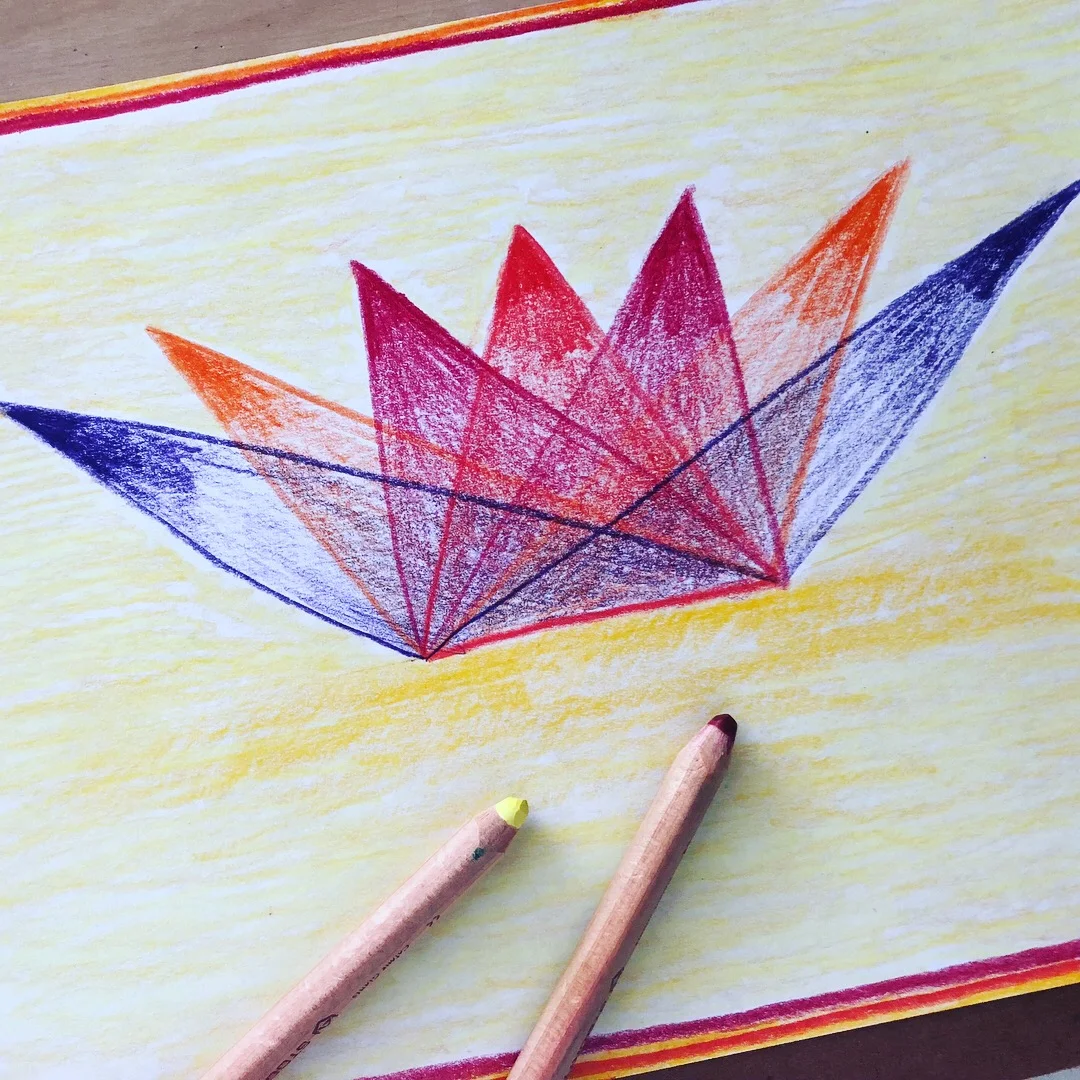
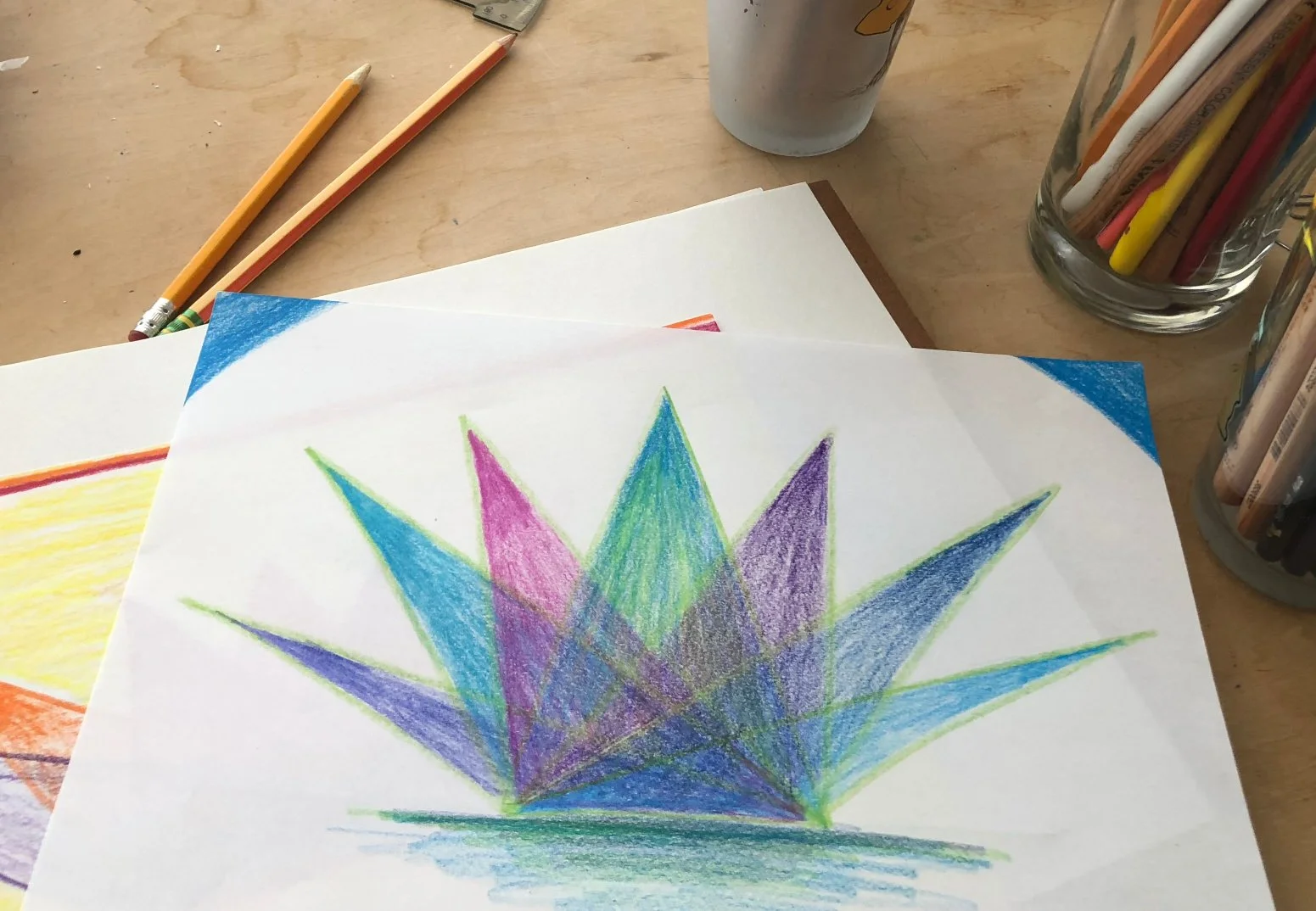
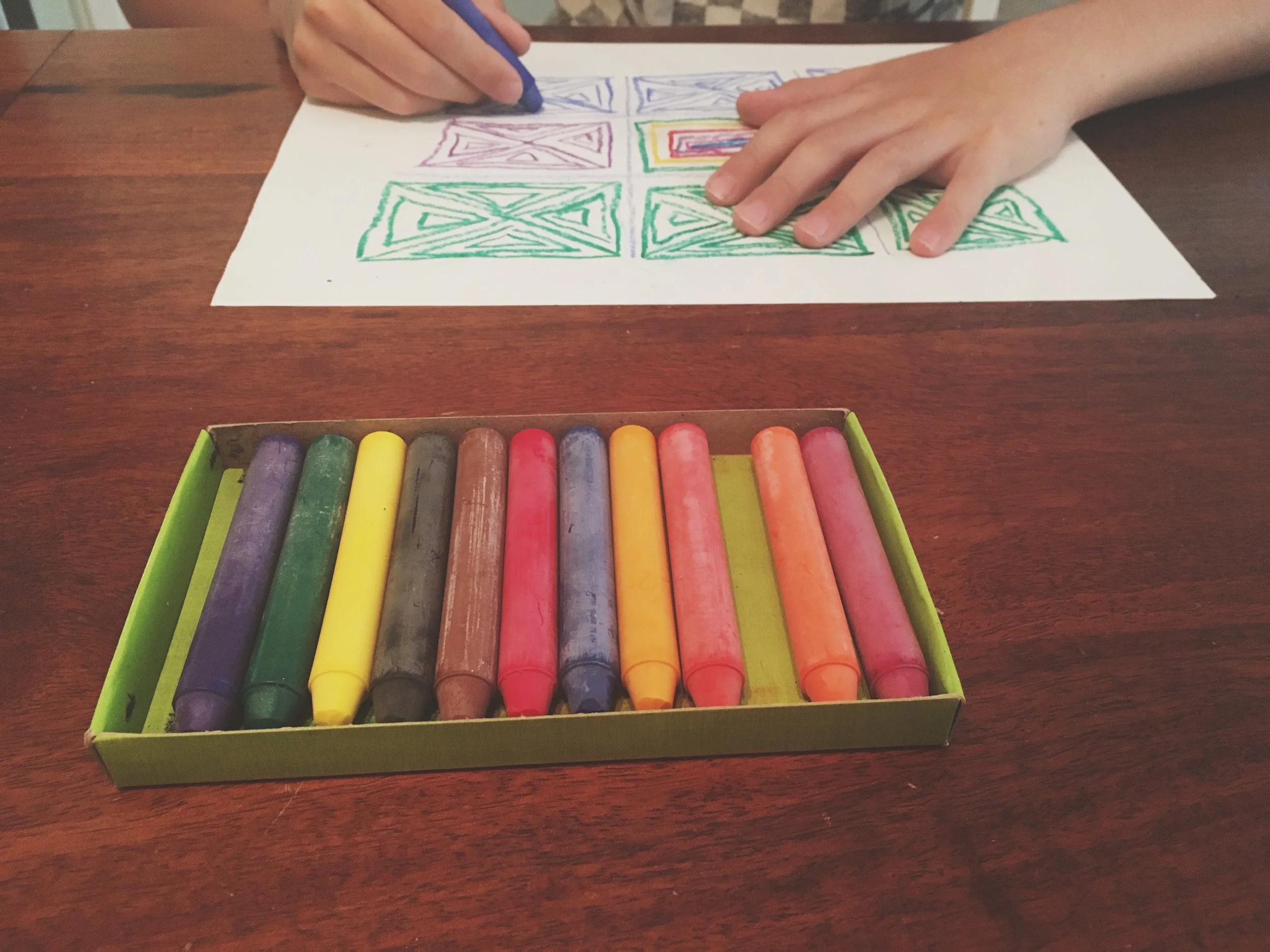
An example of a fifth grade freehand form with colored pencil.
Grade Five - Freehand Waldorf Geometry
Grade five is a special, transitional year, symbolic of the peek of childhood. The students study great civilizations of the past, including the “Golden Age” of Greece. The students themselves are in the golden age of childhood.
They are at the peak of their development in their child bodies and have gained as much mastery of their physical bodies as they are going to before heading into puberty. Fifth grade also marks the transition from form drawing to geometry. The goal of grade five “freehand geometry” is to lock the archetypal geometric forms into the body by drawing them without the use of tools. Classes also set out to find geometric forms in the world outside of their classrooms.
(Learn more about fifth grade geometry here!)

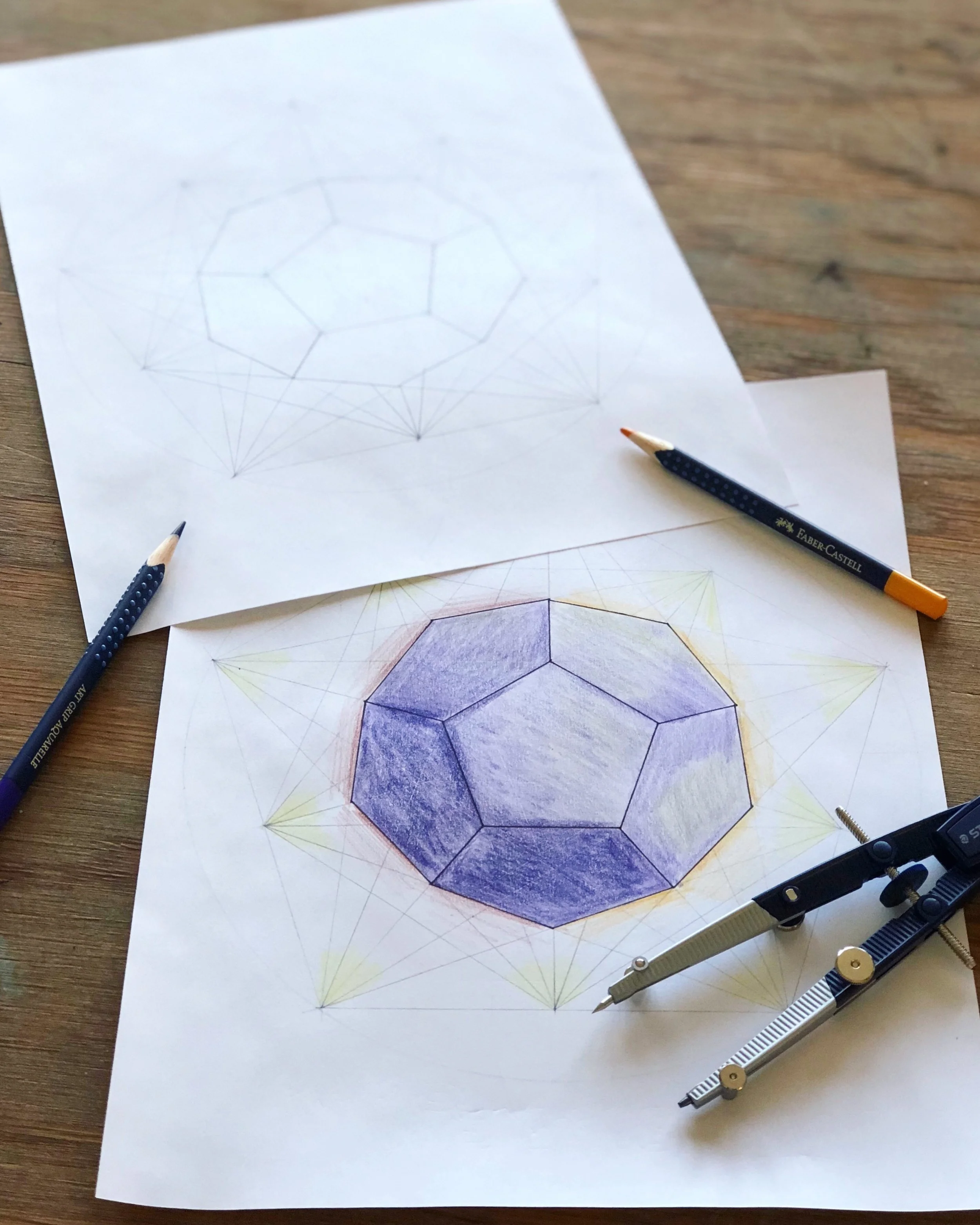
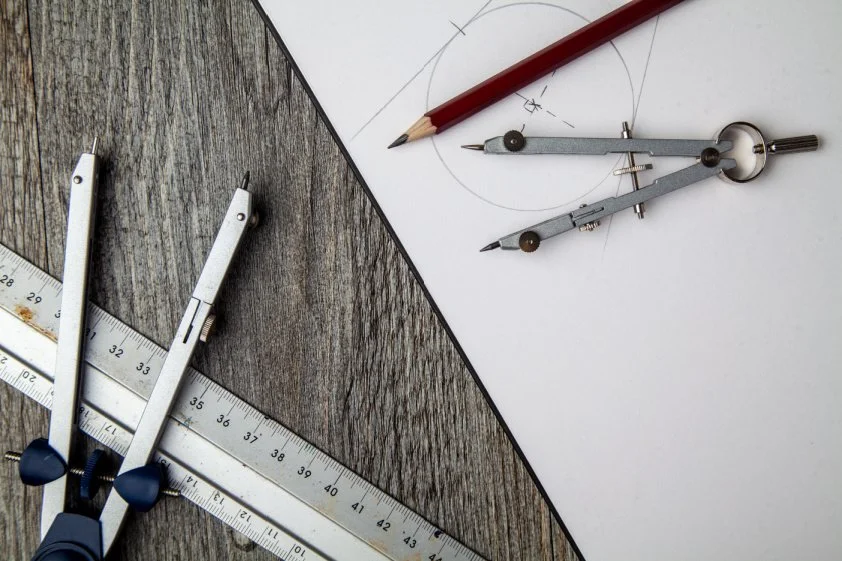
This form begins with twelve points on a circle- all constructed with a compass and straightedge!
Grade Six - Geometric drawing tools
With the arrival of adolescence, grade six becomes a year of re-birth both physically and in the curriculum. In geometry, we need to go all the way back to the beginning with straight lines and curved lines. This time, however, the children learn to construct lines and arcs with geometric drawing tools. A straightedge (ruler) constructs a line and a compass constructs an arc. The students will now begin a second journey through geometry that mirrors grades 1-5. The three-fold approach to learning (doing, feeling, thinking) is beautifully displayed in the geometry curriculum. In grade 6, the focus is on the physical doing aspect of learning. Learning to use tools to construct and measure is a physical task and it challenges the students as they begin to develop new physical bodies. The focus on “doing” in grade six mirrors the 1st and 2nd grade curriculum where an understanding of lines, arcs, and patterns comes from drawing forms with both the hands and feet, walking patterns, and rhythmic clapping games, etc.
(Learn more about sixth grade geometry here!)

Seventh grade geometry curriculum weaves into history, art, mathematics, human anatomy, and more!
Grade Seven - Inward and outward exploration
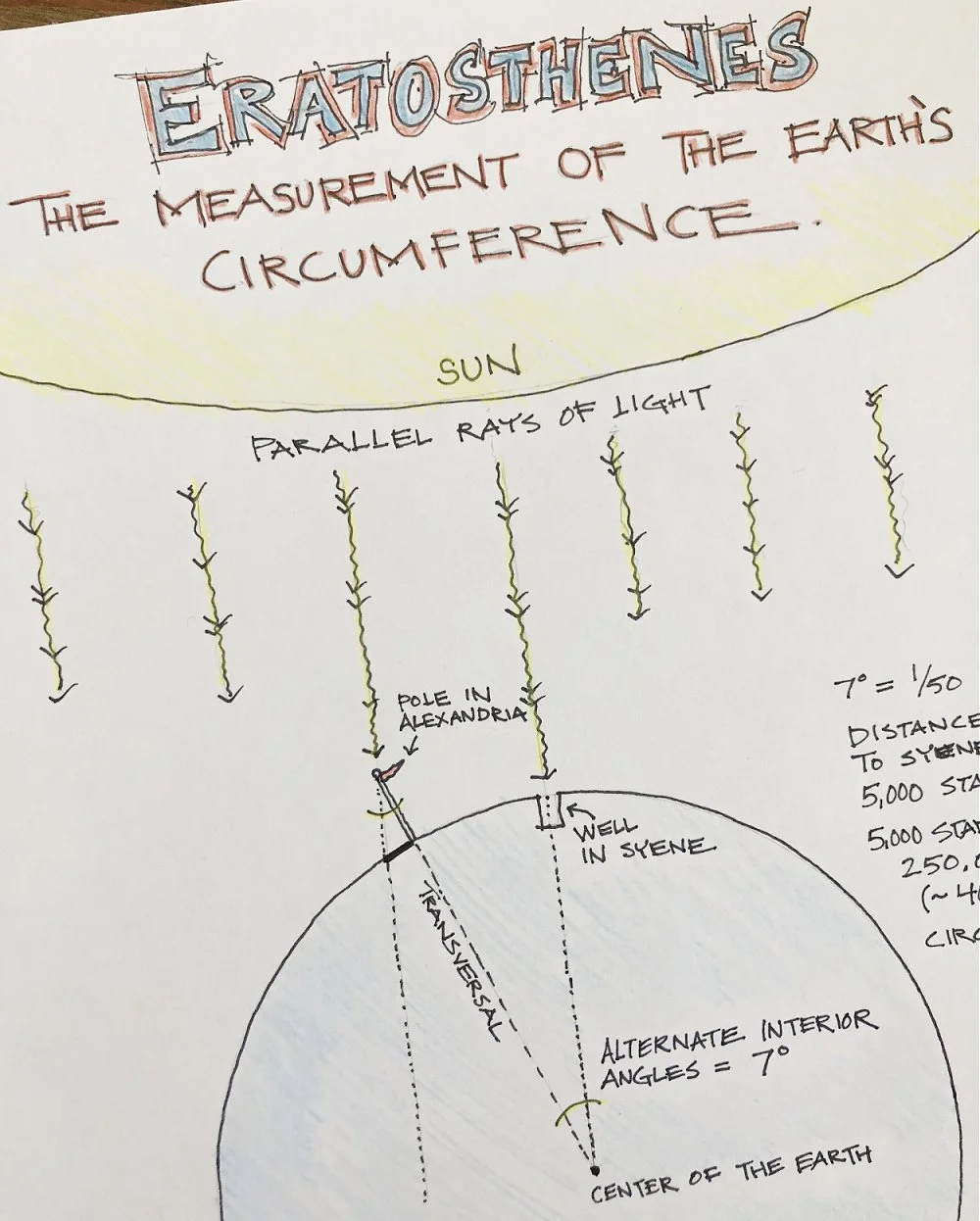
Grade Seven in Waldorf schools is generally thought of as “the year of exploration.” A seventh grader, now fully immersed in adolescence, is ready to outwardly explore the physical world and inwardly begin an exploration of the question “who am I?” The feeling life of the seventh grader takes center stage in the curriculum as we use geometry to understand the human body and the natural world we live in. Da Vinci’s Vitruvian Man and the work of Fibonacci give us clues about the mathematical formula behind all that is living on our planet. It’s an incredible moment when students discover that the same ratios and patterns found in pentagrams, roses, apples, insects, hurricanes, and the milky way galaxy, are also found in the structure of our own bodies. The observational studies of nature performed by the likes of Plato, Pythagoras, Eratosthenes, Fibonacci, and Leonardo Da Vinci are mirrored by the observational powers of the seventh grader (they see everything, yes?).
Grade Eight - Digging deeper
In grade eight, the geometry curriculum enters the thinking realm. Armed with knowledge about how to use the tools of the geometer and the experience of searching for one’s self both in nature and the human body, the students are ready to become mathematicians, in the ancient Greek spirit of the mathematician being one who studies all things.

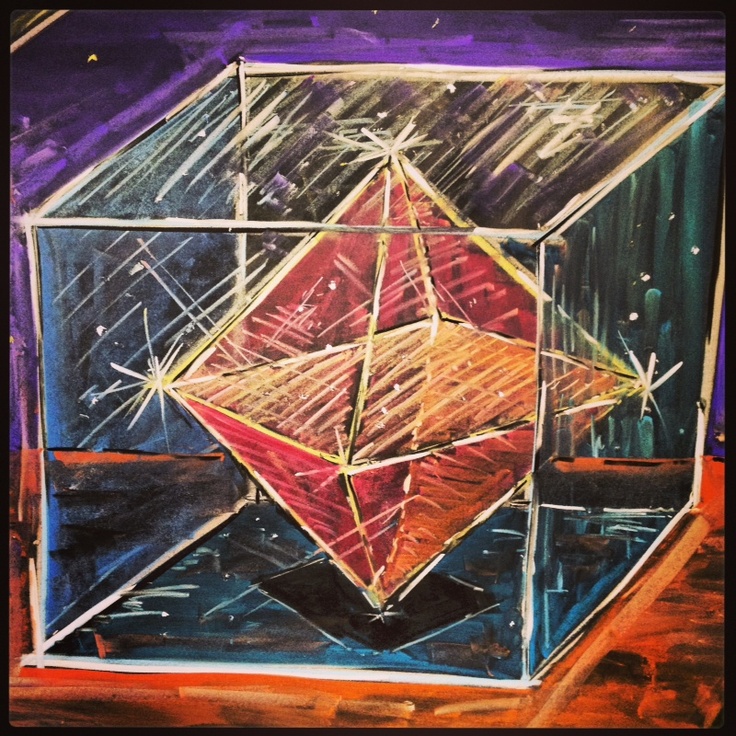
Eighth grade geometry works with 3D forms- both on paper and with hands-on modeling!
We can now venture into the world of abstract thought and theory. The students will grapple with how to measure and study the three dimensional world on the two dimensional surface of the paper. By the 8th grade, it is the hope that students can see that there is always more than meets the eye, and they now have the physical and intellectual tools to dig deeper through observation, making precise measurements and calculations, and articulately describing what they see. They are mathematicians, scientists, and philosophers training to see things on multiple levels.
On one level, numbers define quantities and help us with measurements and calculations. On another level, each number has its own unique set of qualities. Like the circle, the number one represents wholeness and the beginning. Plato called the circle “the mother of all shapes.” When the whole is cut into two, polarities are created (up, down, left, right, life, death, hot cold, positive, negative, male, female, etc.). The number three has a very balanced quality (tripods, tricycles, triangles). This way of understanding the quality of numbers is similar to the phenomenological way of teaching science. When a botany student imagines a plant, the goal of the teacher is to get the child to have a fluid mental picture that includes the entire life cycle of the plant, as opposed to just a fixed image of the plant in a particular moment in time.
With geometry, the goal for the 8th grader is to help them think of numbers not just as quantities but as parts of patterns in nature with their own qualities that shape the world around us and our experience of the world.
“Let no one ignorant of geometry come under this roof.”
•We created a 3 page Qualities of Numbers reference guide for you! Tell us where to send yours in the form below. It’s free!
•We offer a comprehensive Geometry curriculum, covering the grades 5-8.
Related content:




Waldorf Grade One Painting : Out of the Color
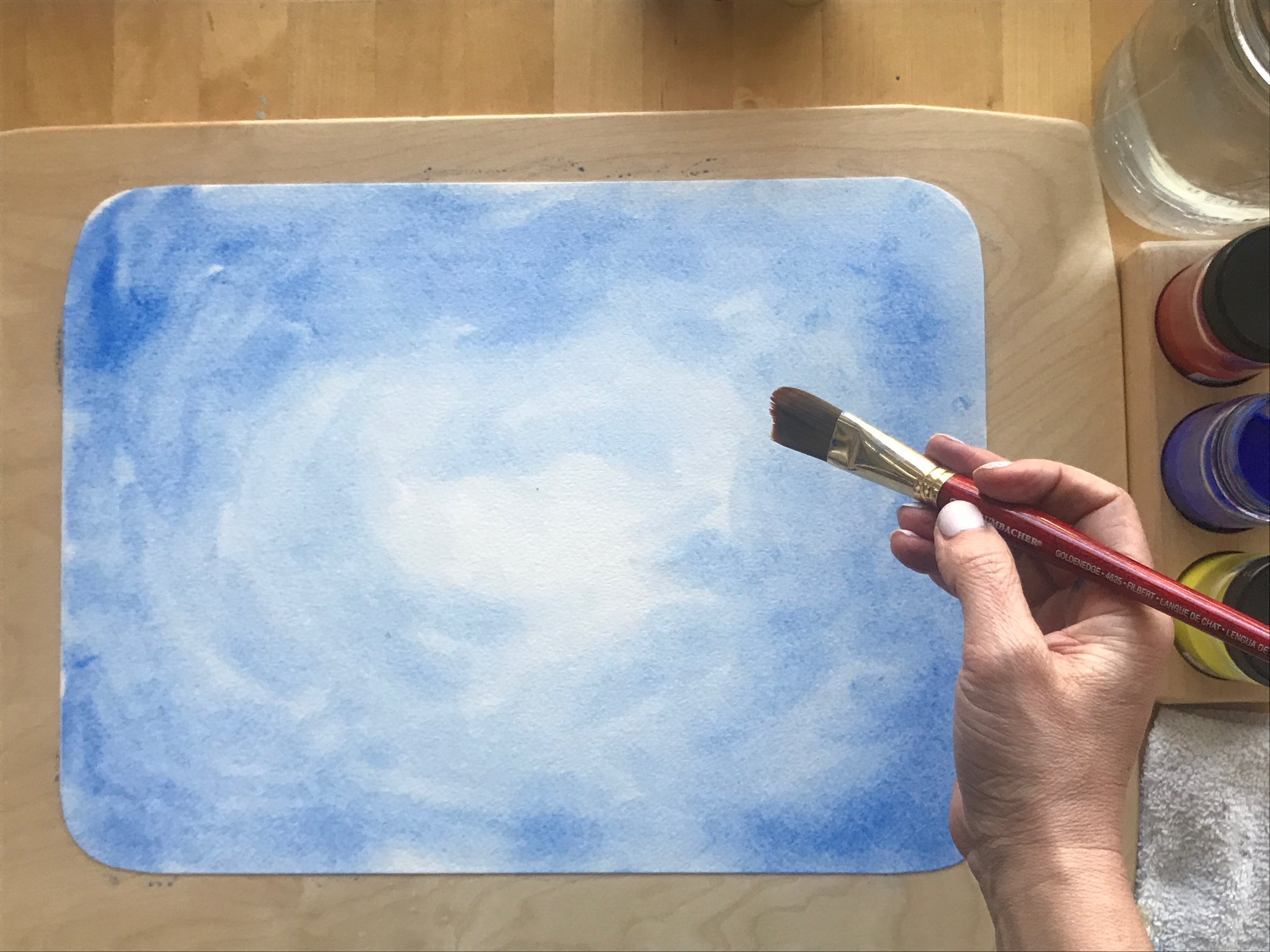
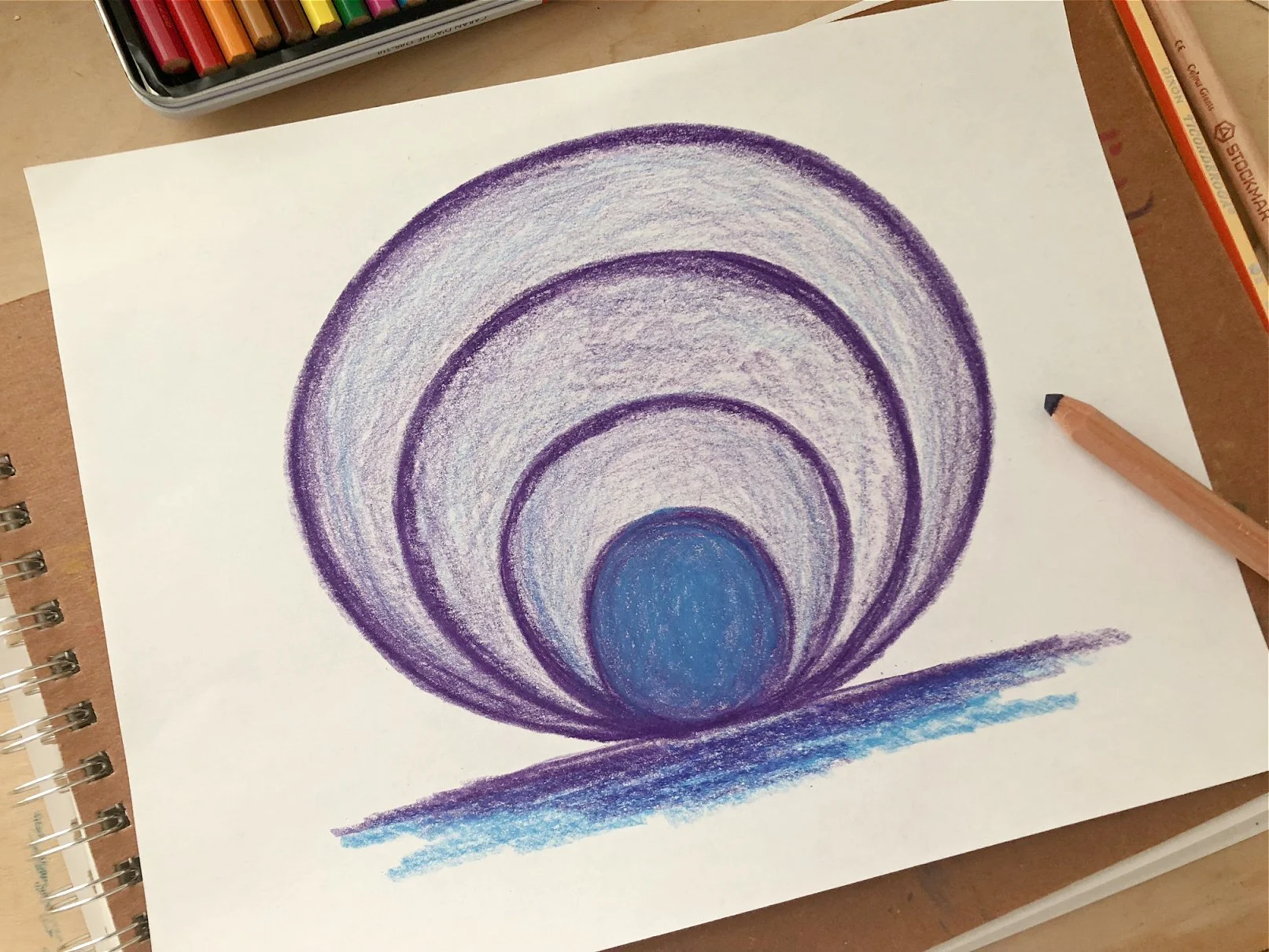
Connecting with the color blue in a simple, yet meaningful painting activity.
Children in Waldorf schools begin painting with liquid watercolors on damp paper in preschool and kindergarten.
The use of this medium continues into grade one, however at this point there is a shift in the way the weekly painting lesson is presented.
The 6-7 year old child learns through experiences. They’ve left kindergarten and are transitioning slowly into more structured learning.
In his Colour Lectures, Rudolf Steiner talks about the importance for each artist (student) to know each of the colors, to understand them individually, and also how they interact with each other. He specifically says that we need to experience the colors in our feeling life in order to understand them. Once we understand them in their trueness, then we can really use them.
“Let us try to sink ourselves completely into what we receive through colour from the rich and varied world around us. We must feel what is in colour if we wish to penetrate into its true nature, bringing insight into our feelings. We must question our feelings about what is living in the colour which surrounds us. ”

Painting in primary colors is a wonderful place to begin for the growing first grader.
Painting lessons create opportunities for students to develop an intimate understanding of the colors through their imaginations, movement, and imitation.
When the teacher brings the lessons in partnership with short verses and stories (which help to personify the colors), the children live into each experience fully.
“Painting lessons also provide the teacher with a further opportunity for getting to know the children’s soul constitution in even more detail. Different temperaments and constitutions reveal themselves through what and how the children paint.”

Bring Waldorf watercolor painting curriculum into your homeschool routine today!
In grade one the lessons are simple color experiences guided by the teacher. It is purely artistic work - there is no expectation of the children creating a specific form or picture of something. These experiences are ordered in such a way that allows the children to begin to understand the dynamics of the colors by themselves, and in relation to each other.
The painting lessons begin very simply, with yellow by itself. Then the children will experience only blue. Eventually the two, yellow and blue, will be brought together on the page and the children will experience them together. Next, red is introduced by itself. Eventually red and yellow will be presented together, and then red and blue. Each of these experiences offers the children something new to live into, all the while expanding their understanding of the nature of each of the colors. (Of course, a natural result of bringing 2 primary colors together in a painting lesson is the birthing of the secondary colors - orange, green and purple. A wonderful moment in any painting lesson!)
As the year progresses, the teacher guides the children as they experience all 3 colors on the page together, culminating towards the end of the year with the children learning to create a color wheel. The color wheel becomes the foundation of many future paintings the children will create in each progressing grade.
*Looking for support painting with your child? We made you something:
About the Authors
Robyn Beaufoy is Waldorfish’s CEO, and also a course instructor for Simple Season (coming soon!), Waldorf Art for Beginners, and Weekly Art Foundations. You’ll find her intuitive touches and influences throughout everything Waldorfish offers! Robyn has been in the world of education for over 25 years, with an MA in Education and a certification in Waldorf teaching - she also homeschooled both of her children for some of that time. In 2012 Robyn co-founded Waldorfish.com, creating it with the vision of making Waldorf inspired-art and pedagogy more accessible, joyful, and doable for homeschoolers all over the world.
Amanda Ziadeh Mercer is a dynamic Waldorf Teacher, and is the creator of our Painting courses for the grades 1-3. She has had the pleasure of working with children in varying stages of development, ranging from infants in Parent-Child programs to the more mature students of the eighth grade. This wide range of experiences has gifted her a full picture of the developmental stages of childhood.
Looking for something?
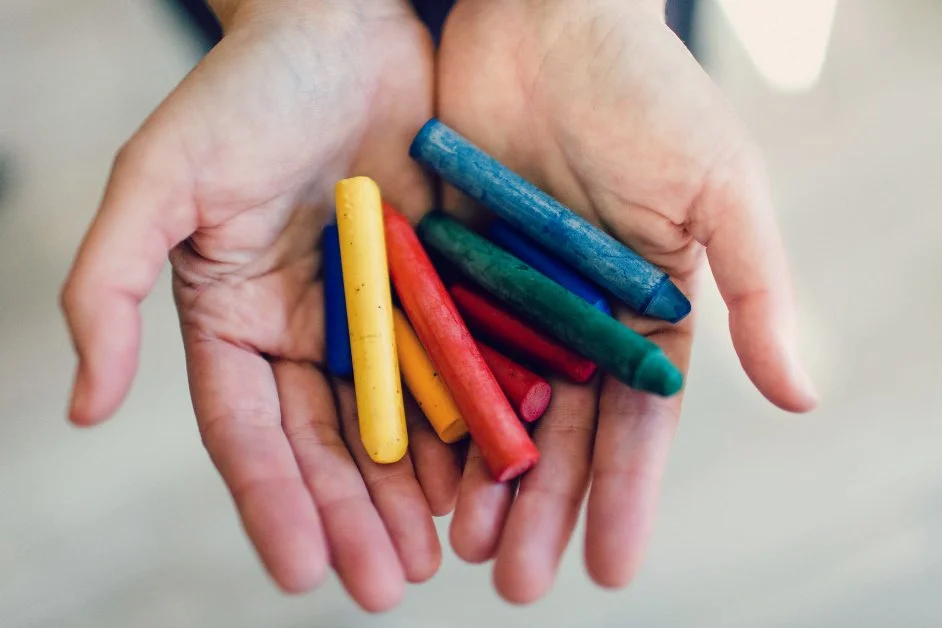
Welcome to Waldorfish! We started this adventure in 2012 out of a desire to make Waldorf training more accessible to class teachers in remote locations and to homeschooling families everywhere! Read more, click here.


WE WON! Our Weekly Art courses were voted “best interactive art program.” Learn more about the award, here.


Click here for a full list of schools we work with.
A few of our most popular blog posts:

Who are our courses for?

Starting Waldorf First Grade
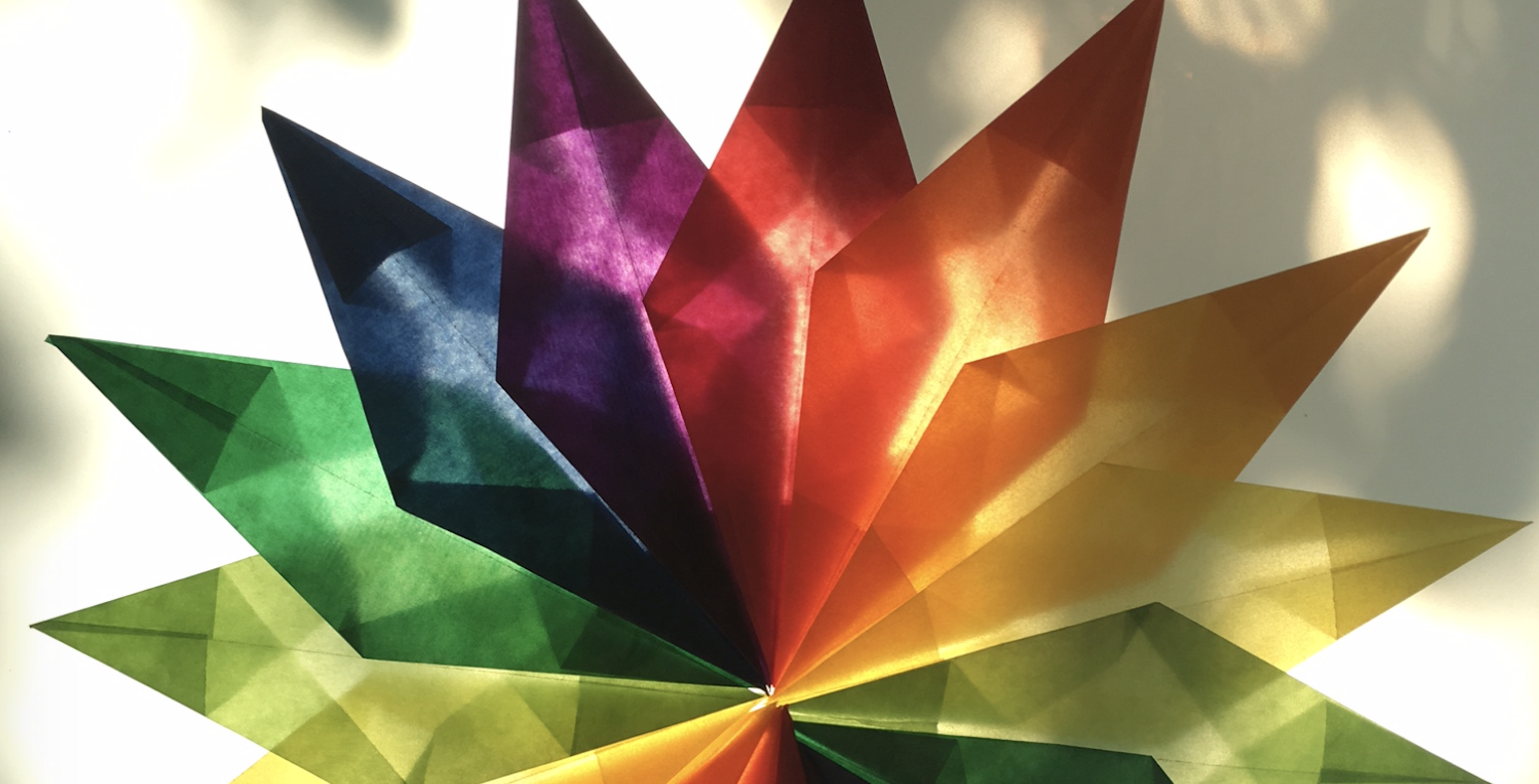
4 Things to Know Before Planning Your Homeschool Year

In Praise of Balance: A Healthy Festival Life
Science in Waldorf Middle School: Starting Something New!